Why Food Lounges Are Winning: Americans Are Done with Stiff Dining Rooms
There's a moment most of us have experienced in a fine dining restaurant: you're seated at a table that feels slightly too formal, the menu is using words you're quietly Googling under the table, the waiter's energy suggests mild disapproval, and despite the fact that you're about to spend serious money, you feel somehow out of place. You order carefully. You sit up straighter than you normally would. You leave having eaten well but feeling like you ran some kind of gauntlet.
That experience — that particular combination of expense and discomfort — is increasingly something Americans are opting out of. And food lounges are what they're opting into instead.
The Third Space Problem That Food Lounges Are Solving
Urban sociologist Ray Oldenburg coined the term "third place" decades ago to describe the social environments that exist outside of home (first place) and work (second place) — the coffee shops, barbershops, and neighborhood bars where community actually forms. For a long time, traditional restaurants tried to fill that role, but the format never quite worked. The pressure to turn tables, the formality of service, and the implied expectation that you'd arrive, eat, and leave created a transactional dynamic that doesn't lend itself to the kind of relaxed, extended socializing that a real third place requires.
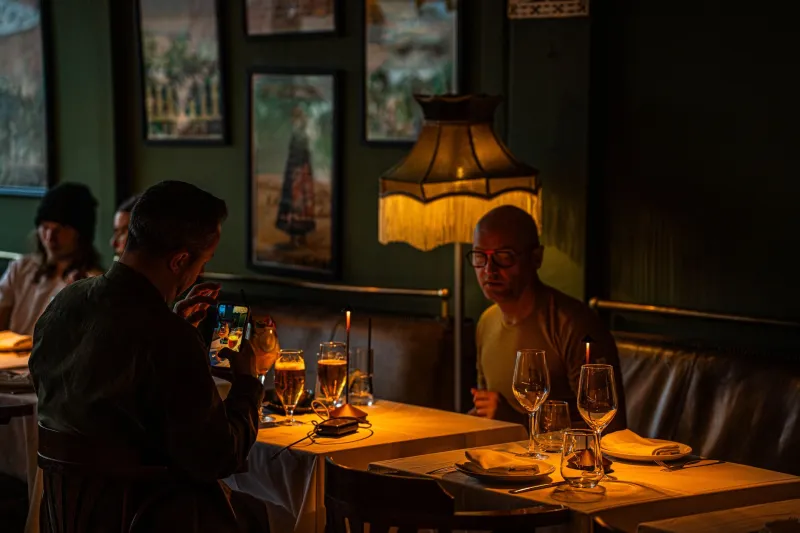
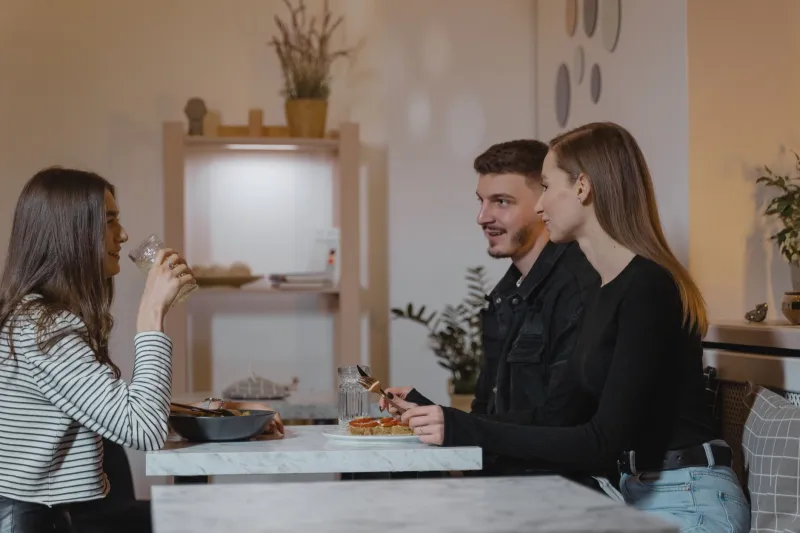
Food lounges are built differently from the ground up. The emphasis on comfort — communal seating, flexible menus, low-pressure service, ambient music at a volume that allows actual conversation — creates an environment that invites people to stay. Not just to eat, but to exist for a while. That's a fundamentally different value proposition than a restaurant, and it's resonating.
Gen Z and Millennials Are Rewriting the Dining Contract
It would be easy to frame this as a generational story — and to some extent, it is. Gen Z and millennials are the primary drivers of the food lounge boom, and their relationship to dining out reflects broader shifts in how these generations think about spending, social connection, and authenticity.
For starters, both groups came of age during periods of economic instability. Millennials entered the workforce during the 2008 financial crisis; Gen Z has navigated a pandemic, inflation, and a housing market that feels permanently inaccessible. When money is finite, the calculus around where to spend it gets more intentional. A $200 tasting menu at a restaurant with a dress code and a three-week reservation window is a hard sell when a food lounge can deliver a genuinely memorable meal and evening for a fraction of that cost.
But it's not purely economic. These generations have also developed a sophisticated skepticism toward anything that feels performative or exclusionary. Fine dining's traditional signifiers — the formal service, the elaborate plating, the hushed reverence — read to many younger diners not as markers of quality but as theater. Food lounges strip that theater away and replace it with something that feels real: good food, comfortable space, and the freedom to just be.
What "Casual" Actually Means in This Context
It's worth clarifying what we mean by casual, because the food lounge movement isn't a race to the bottom in terms of quality. Some of the most technically impressive food being served in American cities right now is coming out of lounge-format kitchens. The casualness is about attitude and environment, not standards.
Consider what's happened in cities like Portland, Nashville, and Austin — places that have become genuine food destinations precisely because their dining culture resists the formality of traditional fine dining. The chefs working in these cities are trained, talented, and serious about their craft. They're just serving that craft in spaces where you can wear what you want, order at your own pace, and not feel like the evening is being choreographed for you.
This is an important distinction because the food lounge model doesn't represent a lowering of expectations. It represents a reorientation of what those expectations are pointing at. Instead of evaluating a dining experience by how formal and controlled it felt, you evaluate it by how much you enjoyed yourself — the food, the company, the atmosphere, the whole thing taken together.
The Hospitality Industry Is Paying Attention
The restaurant industry has been watching this shift with a mixture of anxiety and adaptation. Traditional fine dining establishments have been struggling with reservation no-shows, staffing challenges, and declining interest from younger diners for years. Meanwhile, the lounge-format spots that have opened in the same markets are often fully booked weeks out.
This hasn't gone unnoticed. Several high-profile chefs who built their reputations in formal dining environments have quietly pivoted toward more casual concepts over the past few years. The reasons they cite publicly tend to be about creative freedom and accessibility. The reasons industry insiders discuss are often more straightforwardly commercial: the market has moved, and the restaurants that don't move with it are struggling.
We're also seeing hotel brands, which have historically leaned heavily into formal dining as a prestige signal, start to incorporate lounge-format food concepts into their properties. The W Hotel's food and beverage programs, for instance, have increasingly embraced the lounge aesthetic. Even some Marriott and Hilton properties are experimenting with less formal dining environments in response to guest feedback.
Community Is the Product
Here's the piece of this story that doesn't always make it into the business analysis: food lounges have become genuinely important community spaces for a lot of Americans, particularly in cities where other forms of third-place gathering have eroded.
The local bar has been in decline for years. The coffee shop has become increasingly transactional as remote workers turned them into de facto offices. Community centers and civic spaces have been defunded or closed in many cities. In that landscape, the food lounge — warm, accessible, designed for lingering — fills a real social need.
This is especially true for younger Americans navigating what has been widely documented as a loneliness epidemic. A space where you can show up solo or with friends, stay as long as you like, eat well, and feel like part of something — that's not a small thing. That's actually kind of essential.
Where This Goes From Here
The food lounge isn't a trend that's going to peak and recede. The cultural conditions that created it — economic pragmatism, generational skepticism toward formality, genuine hunger for community — aren't going anywhere. If anything, they're deepening.
What we'll likely see is continued evolution within the format: more chefs bringing serious culinary ambition to lounge environments, more thoughtful design in these spaces, and a gradual blurring of the line between what we used to call a restaurant and what we now recognize as a lounge.
For diners, that's a genuinely exciting development. The idea that you can eat exceptionally well, in a space that actually wants you to relax and stay a while, without spending a small fortune or conforming to someone else's idea of how an evening should unfold — that's the future of dining in America. And honestly? It's about time.
Eat well, chill hard. The food lounge figured that out before the rest of the industry caught up.