Your Brain Is Eating the Room: How Lounge Atmosphere Makes Every Bite Taste Better
You've had this moment. You order something at a lounge — maybe a braised short rib, maybe a truffle flatbread — and it just hits. Not just good. Unforgettable. Then you try to recreate it at home, follow the recipe to the letter, and it's... fine. Totally fine. But not that.
Here's the thing: the food might be identical. What changed was everything around it.
Food scientists and sensory researchers have been quietly building a case for years that the environment you eat in doesn't just set the mood — it literally changes how your brain interprets flavor. The lounge, it turns out, isn't just a vibe. It's an ingredient.
The Science of Eating in the Dark (Kind of)
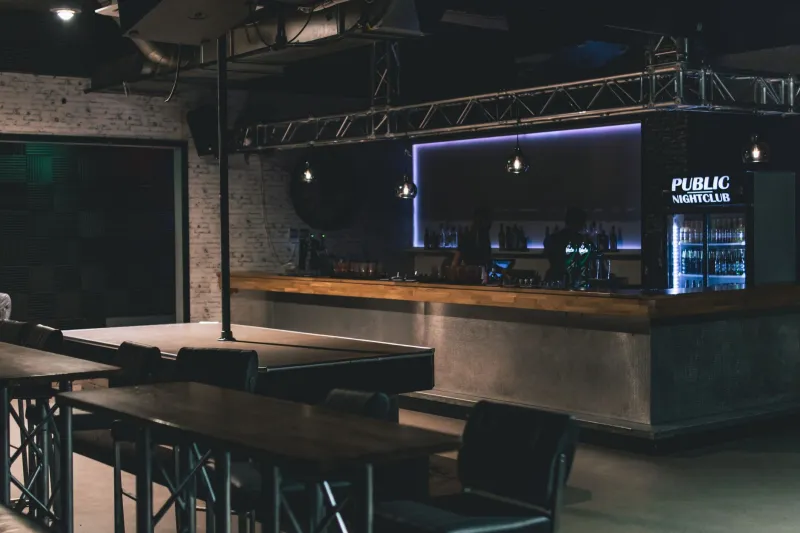
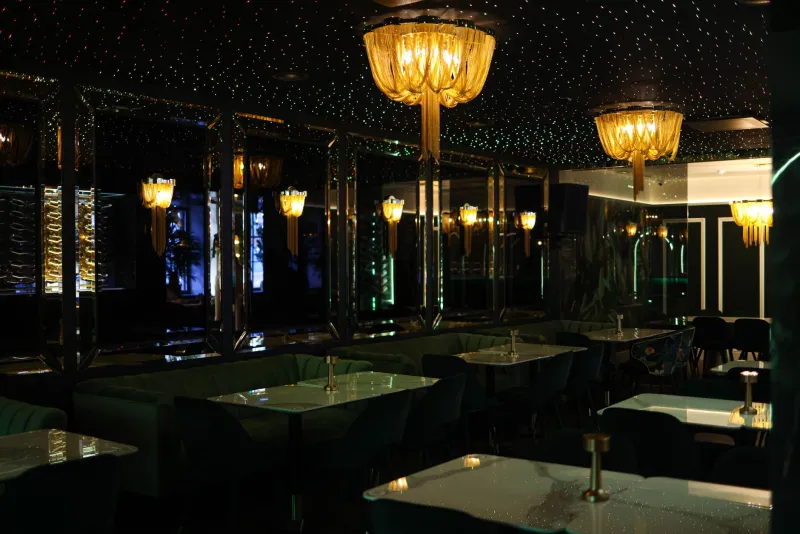
Let's start with the obvious one: lighting. Dimmer environments have been shown in multiple studies to slow down the pace of eating, reduce anxiety, and increase sensory focus. When your eyes aren't doing as much work, your other senses — taste, smell, touch — quietly step up.
A landmark study out of Cornell's Food and Brand Lab found that diners in softer-lit restaurants rated their food as significantly more enjoyable and ate more mindfully compared to those sitting under bright fluorescent lighting. Bright light creates a kind of urgency. It signals alertness, efficiency, get-in-get-out energy. Dim light tells your nervous system to slow down and actually be somewhere.
When you're relaxed, your taste perception sharpens. Bitter notes become more nuanced rather than harsh. Umami deepens. Sweetness lingers. Your brain, no longer scanning the room for threats (or, let's be real, fluorescent ceiling panels), can fully commit to what's on the plate.
This is why that lounge-style lamb chop tasted like a spiritual experience. The lighting wasn't romantic — it was neurological.
Low Seating, Lower Guard
Here's one that doesn't get talked about nearly enough: the physical position of your body while you eat genuinely affects how much you enjoy the meal.
Traditional dining chairs keep you upright, arms at a formal angle, posture-conscious. There's a reason business dinners happen at stiff tables — the setting promotes alertness and keeps people slightly on edge. That's useful if you're closing a deal. It's not useful if you're trying to taste the complexity in a slow-cooked short rib.
Lounge seating — deep cushions, lower tables, softer back support — shifts your body into a parasympathetic state. That's the nervous system mode associated with rest and digestion. Your gut literally processes food differently when you're relaxed. Enzymes flow more freely. You chew more thoroughly. You notice more.
Food psychologist Dr. Charles Spence at Oxford has spent years documenting how posture, furniture height, and physical comfort influence flavor perception. His findings consistently point to the same conclusion: the more physically at ease a diner is, the more positively they rate the taste of their food — even when the food is identical to what's served in a stiffer setting.
So yeah. That sunken sectional at your favorite lounge? It's doing work.
Layered Flavors Meet Layered Atmosphere
Good lounge food isn't just tasty — it's built in layers. A dish might open with something bright and acidic, settle into something rich and savory, and finish with a whisper of heat or sweetness. This mirrors the atmosphere itself, which is also layered: soft music underneath ambient conversation, candlelight against textured walls, the smell of something slow-cooking drifting from the kitchen.
This isn't accidental. The best lounge chefs and designers collaborate — sometimes explicitly, sometimes intuitively — to create what sensory researchers call crossmodal correspondence. That's the phenomenon where your senses reinforce each other. A warm amber glow makes warm, fatty flavors feel more satisfying. Low bass frequencies in background music have been shown to enhance bitter and umami notes. The texture of a velvet cushion under your hand while you eat something silky on the plate creates a kind of full-body coherence.
In other words, when the room and the food speak the same language, the experience becomes exponentially richer than either one could deliver alone.
Why Your Kitchen Doesn't Hit the Same (Yet)
Most home kitchens are designed for function. Bright overhead lights, hard surfaces, upright seating — all of it optimized for efficiency and cleanup, not for flavor perception. That's not a criticism. It's just architecture doing its job.
But if you want to close the gap between your dinner table and that lounge you keep going back to, the changes don't have to be expensive or dramatic.
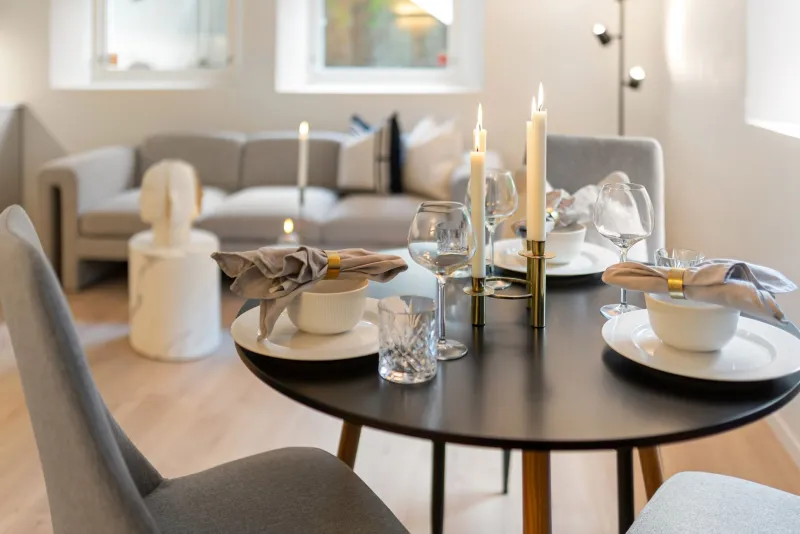
Swap out the overhead lights. Even a couple of warm-toned Edison bulbs or a dimmer switch on your existing fixture can drop the room's energy significantly. Aim for 2700K or lower on the color temperature.
Lower the table height — or change where you eat. Try moving a meal to the living room with a low coffee table and floor cushions, or your couch with a lap tray. Sounds casual because it is. That's the point.
Layer the scent. Lounges smell intentional. A candle with a subtle woody or smoky note while you're eating something hearty isn't gimmicky — it's sensory design. Keep it light so it doesn't compete with the food.
Put on a proper playlist. Not background noise — actual curated sound. Medium-tempo, low-to-mid frequency music (think jazz, lo-fi R&B, or mellow soul) has been shown to enhance the perception of sweetness and depth in food. Save the hype tracks for the pregame.
Slow down the serve. Lounges don't rush courses. Even at home, letting a dish rest on the table for a moment before you dig in — maybe pouring a drink, settling in — gives your senses time to arrive before the first bite.
The Lounge Knows Something Restaurants Forgot
There's a reason the lounge format keeps growing in American dining culture. It's not just that people want good food — they want to feel the food. They want the full sensory experience that turns a meal into a memory.
The old-school fine dining model tried to achieve that through formality and precision. The lounge figured out something smarter: ease is the gateway to depth. When you're comfortable, relaxed, and surrounded by an environment that's been thoughtfully layered, your brain opens up. Flavors land harder. Moments stick longer.
Next time a dish absolutely floors you at a lounge, take a second before you reach for your phone to photograph it. Look at the room. Feel the seat you're in. Notice the light. The food is great — but the room is cooking too.
Eat well. Chill hard. Your brain will handle the rest.