Turn Your Dining Room Into a Vibe: Lounge Secrets That Cost Less Than You Think
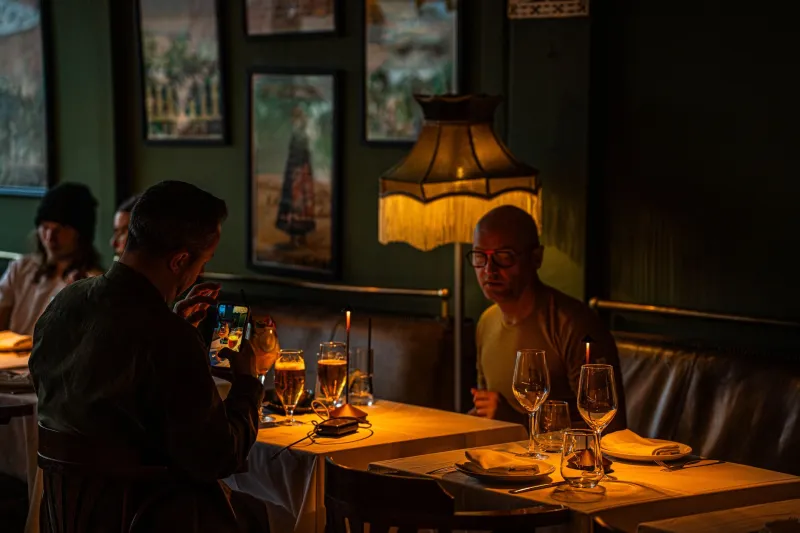
You know that feeling when you walk into a really good food lounge — the lighting hits just right, the music is doing something subtle in the background, and even before the food arrives, you're already relaxed? That's not magic. It's design. And the good news is, most of those elements are completely reproducible at home, no contractor required.
Whether you're hosting a dinner party, meal-prepping for date night, or just tired of eating great food in a space that feels like a break room, this one's for you. Let's break down exactly how upscale lounges create that atmosphere — and how you can bring it into your own space, piece by piece.
Lighting Is Doing 80% of the Heavy Lifting
If there's one thing restaurants and lounges understand that most home kitchens and dining rooms completely ignore, it's lighting. Overhead fluorescents? Absolutely not. Even a standard bright ceiling fixture will kill the vibe before your guests sit down.
Upscale lounges layer their lighting. They combine ambient light (soft, general illumination), accent lighting (focused on art, shelving, or table centerpieces), and task lighting (functional, usually in the kitchen). At home, you can replicate this with a few smart moves:
- Swap out your overhead bulbs for warm-toned LEDs in the 2700K–3000K range. That color temperature mimics candlelight without the fire hazard.
- Add a dimmer switch. This is genuinely one of the cheapest, highest-impact upgrades you can make. A $15 dimmer switch from any hardware store will transform how your dining space feels at different times of day.
- Use table lamps or plug-in sconces instead of relying solely on overhead lighting. Placing a low lamp on a sideboard or buffet table adds depth and warmth to the room.
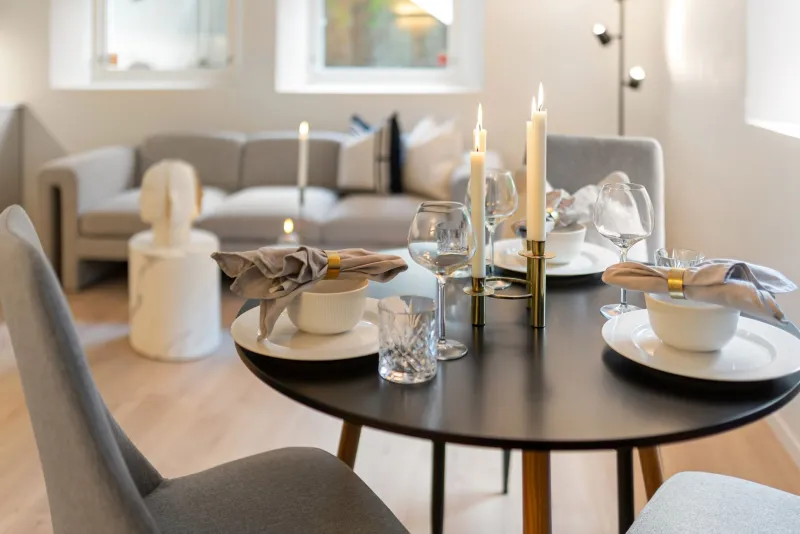
- Candles still work. Seriously. A cluster of pillar candles or a few taper candles in simple holders adds flicker and intimacy that no bulb can fully replicate.
The goal is to make the light feel like it's wrapping around the space, not blasting down at it.
Seating Arrangements That Say "Stay a While"
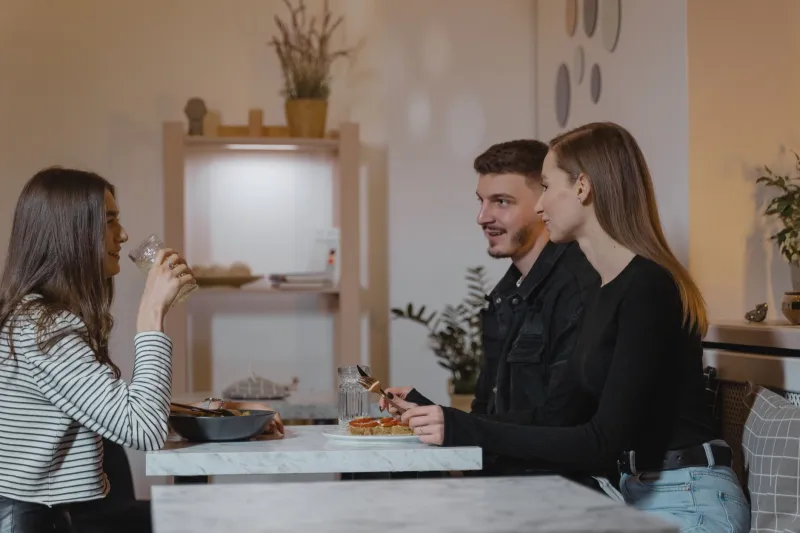
Lounge culture is built around comfort and lingering. Think about how a well-designed food lounge is arranged — there's usually a mix of seating types, tables aren't crammed together, and there's always a sense that you have your own little zone.
At home, the instinct is to push the dining table against a wall or cram as many chairs as possible around it. Resist that. Instead:
- Pull the table toward the center of the room so people can move around it naturally. It signals that the meal is the main event, not an afterthought.
- Mix your seating. If you have dining chairs, consider adding a bench on one side or even a couple of low cushioned stools. That variety in seating height and texture makes the space feel curated rather than matched-set boring.
- Add a lounge chair or loveseat nearby if your space allows. Some of the best food lounges have a transitional zone — somewhere between the table and the couch — where people naturally drift after the meal. A comfortable chair near the dining area extends the experience without forcing everyone to relocate.
The Tableware Situation: Details That Punch Above Their Weight
Lounge-quality food always looks better because of what it's served on and in. The plate, the glass, the napkin — these things register even when guests aren't consciously noticing them.
You don't need to spend a fortune on a matching set of fine china. Instead, think like a stylist:
- Go matte over glossy. Matte ceramic plates and bowls have a much more elevated, editorial look than standard glossy white. Brands like Year & Day, Fishs Eddy, or even Target's Studio McGee line offer affordable matte options.
- Use real cloth napkins. This single swap costs almost nothing and immediately signals that the meal matters. Linen napkins in neutral tones — oatmeal, slate, charcoal — work with almost any food presentation.
- Invest in one good glass. You don't need a full set of crystal. A few genuinely nice wine or cocktail glasses (even just four) will elevate every beverage you serve. Riedel makes solid entry-level options without requiring a second mortgage.
- Serve family-style when possible. Platters and serving bowls in the center of the table create that communal, abundant feeling that great lounges do so well. It's generous and visually impressive.
Music: The Element Everyone Forgets Until It's Wrong
Bad background music is one of the fastest ways to undercut an otherwise solid dining experience. Too loud and conversation suffers. Too quiet and the room feels sterile. Wrong genre and the whole vibe collapses.
The best food lounges treat their playlists like a course on the menu. The music evolves — something a little more upbeat while people are arriving and drinks are flowing, then something smoother and more laid-back as the meal settles in.
For home entertaining:
- Spotify and Apple Music both have curated lounge playlists worth exploring — search terms like "dinner party jazz," "neo soul dinner," or "lo-fi lounge" will get you somewhere interesting fast.
- Keep the volume conversational. A good benchmark: if you have to raise your voice slightly to talk over it, it's too loud. Music at a lounge is felt more than heard.
- Consider the progression. Build a playlist that starts with something a little more energetic and winds down as the meal goes on. It mirrors the natural arc of a good evening.
Scent, Temperature, and the Stuff You Don't See
The most underrated atmospheric elements aren't visual at all. Great lounges are temperature-controlled (not too hot, not too cold), subtly scented, and free from distracting clutter.
At home: clear the table of everyday clutter before guests arrive. Keep the room at a comfortable 70–72°F. Light a candle or use a diffuser with a subtle, food-friendly scent — think cedar, vanilla, or light citrus. Avoid anything too floral or perfume-heavy that might compete with the food itself.
These are small things, but they're the difference between a meal that's just dinner and one that people actually talk about afterward.
The Lounge Mindset Is the Real Upgrade
Here's the thing — the best food lounges aren't just designed spaces. They're experiences that someone decided to take seriously. That intentionality is what you're really trying to import into your home.
You don't need a renovation. You need a perspective shift. Treat your dining space like it deserves attention, even on a Tuesday. Dim the lights. Put on a real playlist. Use the nice glasses. Pull the table away from the wall.
Eat well, chill hard, and repeat — that's not just a motto. It's a design philosophy.