Same Burger, Different World: How the Room Around You Changes Every Bite
You've been there. You order something completely ordinary — a burger, a plate of fries, maybe a simple pasta — and it just hits different. Not because the kitchen pulled off some culinary miracle, but because something about the room made your brain decide this meal was special. Welcome to the lounge effect, and it's more real than most people realize.
Food scientists and behavioral psychologists have spent years documenting what great lounge operators figured out by feel: the environment you eat in doesn't just frame the meal, it fundamentally rewires how your palate processes it. The lighting, the cushion depth of your seat, the distance between your table and the next one — all of it is feeding your nervous system signals that either amplify or flatten what ends up on your tongue.
Your Brain Prices the Plate Before You Take a Bite
Here's something worth sitting with: your brain has already formed a quality expectation before you've touched the fork. Researchers at Oxford's Crossmodal Research Laboratory (yes, this is a real place that studies exactly this kind of thing) have repeatedly demonstrated that sensory context shapes taste perception in measurable ways. Subjects consistently rate the same food as more flavorful, more refined, and more satisfying when it's served in a thoughtfully designed environment versus a plain or harsh one.
What this means practically is that a lounge doing its job right is essentially giving you a head start on enjoyment. Your guard is down, your stress hormones are lower, and your sensory system is primed to receive rather than just process. That's not manipulation — that's smart hospitality.
And for anyone running a tab at a well-designed lounge, it also means you're getting more than food for your money. You're getting a neurological upgrade.
The Lighting Factor: Soft Glow, Stronger Flavor
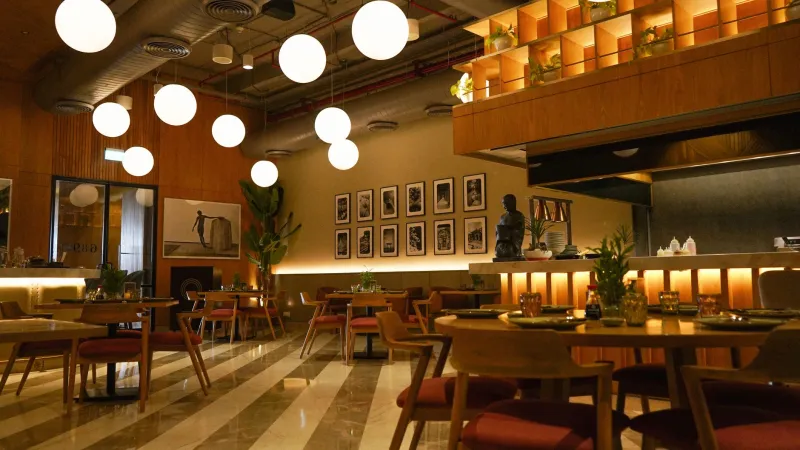
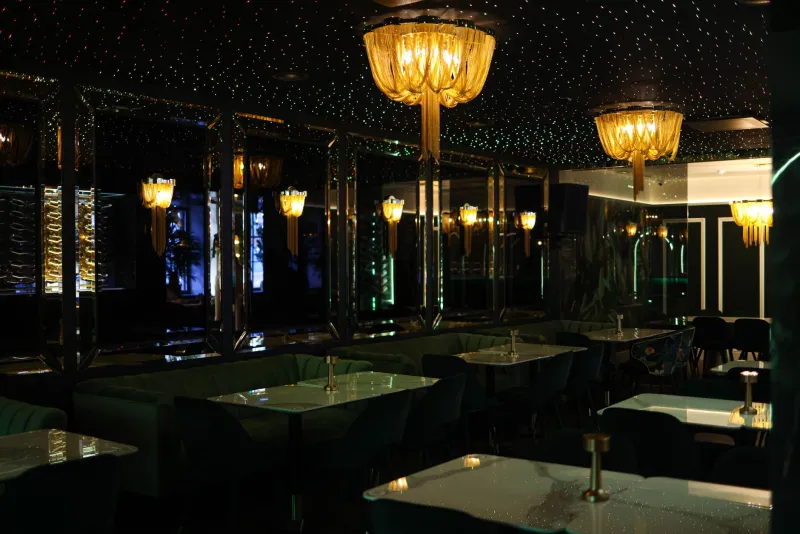
Dim, warm lighting is the oldest trick in the lounge playbook, and it works on two levels simultaneously. First, it slows you down. Bright, cool-toned lighting — the kind you find in fast food spots and hospital cafeterias — subconsciously signals urgency. You eat faster, chew less, and taste less as a result. Warm, lower lighting does the opposite. It tells your nervous system that there's no rush, which means your saliva production increases, your chewing slows, and your taste buds actually get more time to do their job.
Second, soft amber or warm white light makes food look better. Colors pop differently. The char on a burger patty looks intentional and appetizing rather than just brown. The glaze on a piece of salmon catches the light in a way that reads as luxurious. And because we eat with our eyes first, that visual upgrade translates directly into elevated taste expectation — which becomes a self-fulfilling prophecy.
For home diners looking to recreate this: swap your overhead lights for a couple of warm-toned table lamps or plug-in sconces. Add a candle if you're feeling it. The difference is immediate and honestly kind of ridiculous.
Seating Comfort and the Relaxation-Flavor Connection
This one doesn't get nearly enough credit. The physical comfort of where you're sitting directly affects how much you enjoy what you're eating. When you're perched on a hard chair at a cramped table, your body is in a mild state of physical stress. That stress competes with the pleasure signals your brain is trying to process from the food. It's a low-level war happening below your conscious awareness.
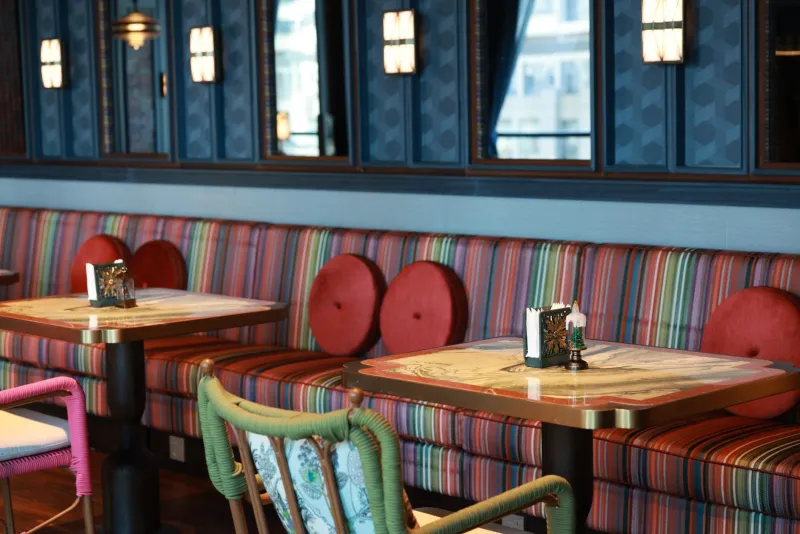
A well-cushioned booth, a chair with proper lumbar support, seating that lets you actually settle in — these aren't luxury details. They're flavor delivery systems. When your body is comfortable, your parasympathetic nervous system takes over, which is the part of your autonomic system responsible for rest, digestion, and — critically — heightened sensory pleasure.
Lounges that nail seating comfort consistently get described by diners as having "better food" than comparable spots that cut corners on chairs. The food isn't better. The experience of the food is better. That's the whole game.
At home, this is an easy fix. Pull the good chairs out. Add a throw pillow to your dining chair if it's on the harder side. Make the seat feel like somewhere you want to stay.
Table Spacing and the Privacy Effect
There's a reason the best lounges aren't packed wall to wall with tables. Space between diners creates a sense of privacy, and privacy creates psychological safety. When you feel like you have your own bubble — even a small one — you relax more completely. You're not subconsciously monitoring the conversation at the next table or feeling watched while you eat. That low-level social vigilance takes cognitive energy, and that energy is energy not going toward savoring your meal.
Studies on social eating have shown that people rate food higher when they feel they have adequate personal space while dining. It's not just comfort — it's focus. A plate in front of you becomes the center of attention rather than a backdrop to ambient social stress.
For home entertaining, this translates simply: don't overcrowd your table. Even if you could technically fit eight people around a six-person table, don't. Give everyone room. The meal will taste better to everyone at it.
Small Details, Big Payoff: The Ambient Stack
Beyond the big three — lighting, seating, spacing — the best lounges layer in a series of smaller environmental cues that collectively create what you might call an ambient stack. Fresh flowers or a single interesting centerpiece. A subtle, non-distracting scent (think cedar, vanilla, or fresh herbs rather than anything sharp or chemical). Background music at a volume where conversation is effortless. Textured linens or placemats that make the table feel intentional.
Each of these on its own is a minor thing. Stacked together, they create an environment that communicates care, and your brain interprets care as a signal of quality. It's almost Pavlovian — a well-tended environment primes you to expect and therefore experience a well-executed meal.
The lounge operators who understand this aren't spending enormous amounts of money. A good playlist costs nothing. A bouquet from the grocery store is five dollars. Linen napkins from a home goods store are a one-time investment. The return on all of it, in terms of how much more you enjoy every meal served in that space, is genuinely outsized.
The Real Takeaway
The lounge effect isn't a gimmick or a marketing illusion. It's applied neuroscience, and it's been running quietly in the background of every great dining experience you've ever had. The environments that make food taste extraordinary are doing something real — they're removing friction, reducing stress, and giving your senses the conditions they need to operate at full capacity.
That $15 burger tasting like a $40 experience isn't about the burger lying to you. It's about everything around the burger telling the truth: you're somewhere worth being, and this meal is worth your full attention.
Set the scene. The food will meet you there.