Better Together: The Real Reason Food Hits Different When You're With Your People
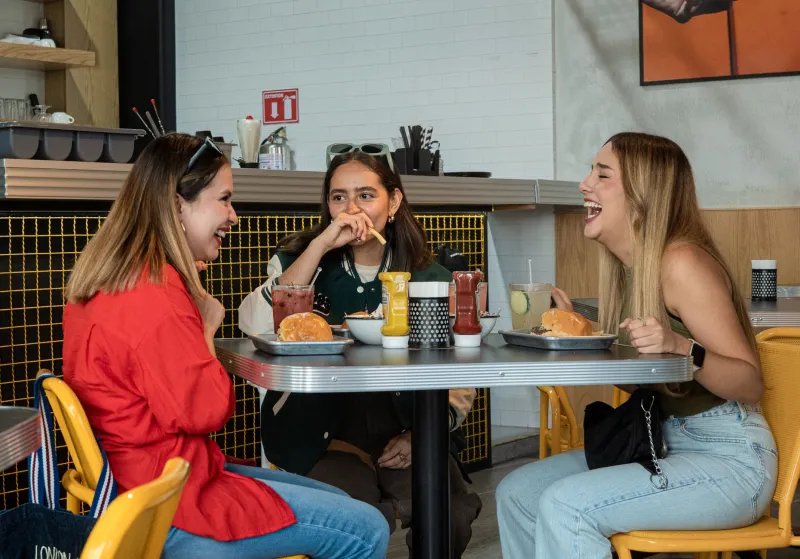
You've had that moment. The food is the same. The restaurant is the same. Maybe you've even ordered the exact same dish a dozen times before. But something about tonight — the company, the laughter, the way everyone's leaning in over the table — makes every bite land like it was cooked just for this moment. That's not nostalgia playing tricks on you. That's your brain doing something genuinely fascinating.
Sharing food with people you love doesn't just make the night better. It actually changes the way you taste.
The Science of Eating Together
Researchers at the University of Chicago published findings a few years back that should make every solo-dining skeptic reconsider their Friday nights. In their study, participants who ate the same piece of chocolate with a stranger rated it less flavorful than those who shared it with someone they already knew. Same chocolate. Completely different experience.
The reason comes down to something neuroscientists call "social mirroring" — the brain's tendency to sync up with the people around us. When you're comfortable with your dining companions, your nervous system relaxes. Cortisol levels drop. And when your body isn't running stress responses in the background, your sensory perception sharpens. You're not just more present at the table — you're actually more capable of tasting.
Dr. Robin Dunbar, the British anthropologist famous for studying social bonding, has spent years connecting the act of eating together to the release of endorphins. The same chemicals that fire when you laugh, hug, or hear your favorite song also get triggered by communal eating. And endorphins, it turns out, make food taste better. Full stop.
The Dishes That Only Work With Your People
Ask any lounge regular about the meal that defined a friendship, and they won't hesitate. There's always a dish.
For Marcus, a 34-year-old from Atlanta who's been coming to his neighborhood food lounge for three years, it's the loaded nachos. "I've ordered them by myself. They're fine," he says. "But when it's me and my boys on a Sunday, watching the game, arguing about nothing — those same nachos are the best thing I've ever eaten. It doesn't make logical sense."
It doesn't have to. The food is just part of the ritual. The ritual is what activates the memory, the comfort, and ultimately the flavor.
Sarah, a 29-year-old from Chicago, has a similar story — except hers involves her mom and a specific pasta dish at their go-to Italian spot. "We've been going there since I was a kid. The carbonara tastes like every good thing that's ever happened to me. When I order it alone, it's just pasta."
This is what food scientists sometimes call the "social flavor effect" — the idea that emotional context doesn't just frame the meal, it becomes part of the meal itself.
Why Shared Plates Hit Harder
There's a reason tapas culture, Korean BBQ, and family-style dining have absolutely exploded across the US over the last decade. It's not just a trend. It's biology.
When you eat from shared plates, you're engaged in a form of synchronized behavior. You're reaching at the same time. Commenting on the same bite. Watching someone else's face light up when they try something new. That synchrony is powerful — it builds trust, deepens connection, and yes, amplifies how good the food tastes.
Food lounges have quietly understood this for years. The best ones aren't designed around individual portions and formal plating. They're built for sharing — wide tables, communal boards, plates meant to travel. The layout itself is an invitation to eat the way humans were always meant to: together, unhurried, with people who actually matter.
The Memory Factor
Here's where it gets really interesting. Food memory is one of the most powerful forms of memory the brain stores. Smell and taste are processed through the olfactory bulb, which sits right next to the hippocampus — the region responsible for emotional memory. That's why a single bite of something can drag you back twenty years in an instant.
But those memories don't form in a vacuum. They attach to the people you were with when the food first made an impression. Which means that every time you eat a meaningful dish with someone you love, you're not just having dinner — you're building a permanent emotional archive that will make every future version of that dish taste like something more than food.
This is why your grandmother's cooking will always beat a Michelin-starred restaurant. It's not that her technique is better. It's that her kitchen is full of you.
How to Build More of These Moments
The good news is you don't need a special occasion to manufacture this kind of dining magic. You just need intention.
Put the phones down — not as a rule, but as a choice. When your attention is actually on the people at the table, your brain registers the experience as significant. Significance is what triggers the neurological response that sharpens your senses and deepens your enjoyment.
Order things that require conversation. A dish you've never tried before. Something that needs to be split. A cocktail pairing that makes everyone argue about whether it works. Novelty and participation keep the table alive, and an alive table makes everything taste better.
And honestly? Don't overthink the restaurant. Some of the most flavor-rich meals happen at the most unpretentious spots — corner lounges, neighborhood joints, the kind of place where the lighting is low and nobody's in a rush. The setting matters less than the company. The company is the ingredient.
The Real Friendship Test
So next time someone asks you what your favorite food is, maybe the real answer isn't a dish. Maybe it's a table. A specific group of people. A night that turned ordinary nachos into something you'd talk about for years.
The friendship test isn't about finding out if your crew has good taste. It's about recognizing that they are the taste — the thing that makes everything richer, warmer, and worth coming back for.
Eat well. Chill hard. But do it with your people. That's when the food really starts.