Slow Down, Taste More: What Happens to Your Palate When You Actually Take Your Time
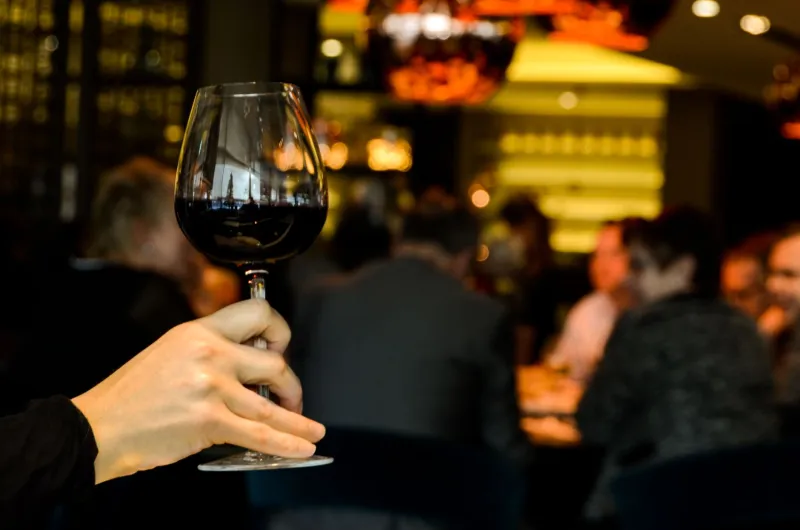
You've probably had this experience: you grab lunch at a fast-casual spot, wolf it down in ten minutes between meetings, and by the time you're tossing the wrapper, you barely remember what it tasted like. Then there are those nights — the ones where you settle into a good lounge, the music is right, the lighting is low, and somehow that same category of food hits completely different. It's richer. More layered. You actually notice it.
That's not a coincidence. That's biology doing its thing.
Your Taste Buds Have a Tempo
Here's something most people don't know: flavor isn't just a snapshot. It's a sequence. When you bite into something, your taste buds, olfactory receptors, and trigeminal nerve (the one responsible for sensations like heat and texture) all fire in a kind of relay race. Volatile aromatic compounds — the stuff that makes food smell and taste complex — need time to travel from the back of your mouth up into your nasal passage through a process called retronasal olfaction.
Translation? If you're eating fast, you're literally skipping half the flavor.
Dr. Gordon Shepherd, a neuroscientist at Yale who wrote Neurogastronomy, has argued for years that flavor is constructed almost entirely in the brain, not just on the tongue. And the brain needs adequate time and calm to build that full picture. Rush the process, and you're working with an incomplete signal. Slow it down, and suddenly you're getting the full broadcast.
What Fast-Casual Culture Does to Your Senses
American fast-casual dining is engineered for speed. Bright lighting, hard surfaces, upbeat background noise — all of it is designed (sometimes deliberately, sometimes just by default) to move people through quickly. And it works. Studies in consumer psychology have consistently shown that louder, brighter environments increase eating pace and reduce the time diners spend at the table.
But there's a real cost to that efficiency. When you're eating fast, your stress hormones stay elevated. Cortisol, which spikes during rushed or anxious states, has been shown to suppress sensory sensitivity. Your body is essentially in a mild version of fight-or-flight mode, and in that state, detecting subtle flavor nuances is pretty low on the priority list.
Add to that the fact that chewing less means less time for salivary enzymes to break down food compounds and release flavor molecules, and you've got a recipe for a meal you'll forget before you even get back to your desk.
The Lounge Environment as a Flavor Amplifier
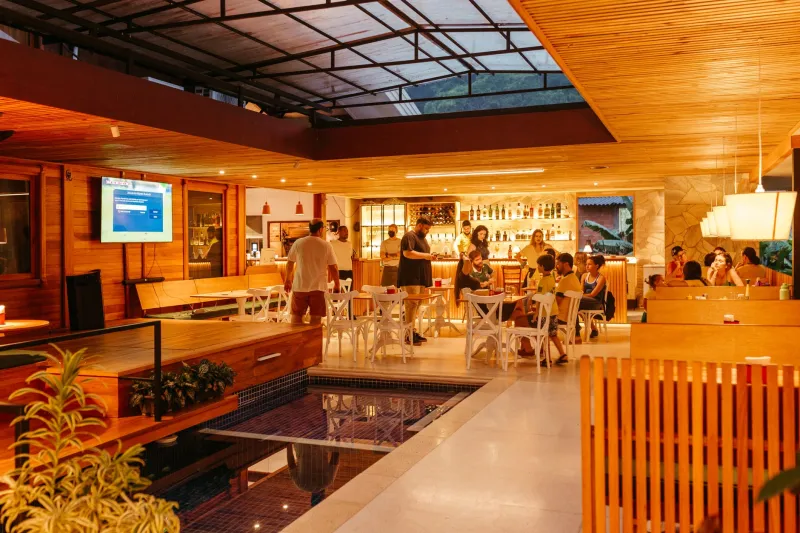
This is where lounge culture quietly does something genuinely smart. A well-designed lounge — dim lighting, comfortable seating, ambient sound at a conversational volume — isn't just aesthetically pleasing. It's neurologically supportive of better eating.
When your nervous system isn't on high alert, your parasympathetic system (the "rest and digest" mode) kicks in. Digestion improves. Saliva production increases. Sensory perception sharpens. You're physically more capable of tasting your food.
Research from the University of Oxford's Crossmodal Research Laboratory, led by experimental psychologist Charles Spence, has shown repeatedly that environmental factors like sound, lighting, and even the weight of cutlery can measurably alter flavor perception. Lower-pitched, slower music, for instance, tends to make food taste richer and more complex. Soft lighting makes people eat more slowly and report higher satisfaction with their meals.
Lounge designers may not be citing peer-reviewed journals when they choose their playlist or their Edison bulbs, but they're landing in the same place science keeps pointing to: environment shapes taste.
The Chew Factor Nobody Talks About
Beyond the atmospheric stuff, there's a mechanical reality to slow eating that's worth understanding. The more thoroughly you chew, the more surface area you expose to your taste receptors, and the longer those receptors stay in contact with flavor compounds. It sounds almost embarrassingly simple, but it's one of the most underrated factors in flavor experience.
Japanese food culture has long emphasized hara hachi bu — eating until you're about 80% full — and the slow, deliberate pace that goes with it. In the US, we tend to eat past fullness in part because we're moving too fast for our satiety signals to catch up. Those signals take roughly 15 to 20 minutes to register, which means a meal eaten in under 10 minutes is almost guaranteed to leave you overfull and under-satisfied in terms of actual flavor enjoyment.
Bringing the Lounge Pace Home
You don't need a reservation to eat better. A few practical shifts can make a real difference:
Kill the overhead lights. Swap harsh overhead lighting for lamps or candles during dinner. The softer light signals to your brain that there's no urgency. Your eating pace will naturally slow.
Put on a real playlist. Not whatever's autoqueuing from your last workout session. Choose something with a slower BPM — jazz, lo-fi, acoustic. The rhythm of the music you're listening to genuinely influences the rhythm of your eating.
Set the table like you mean it. Even if it's just you and a Tuesday night leftover situation, using real plates, cloth napkins, or even just clearing the table of clutter shifts your mental context. You're eating, not just fueling.
Put the phone face-down. This one's obvious but brutal. Distracted eating is rushed eating. Your attention is part of the flavor experience. Scrolling while you eat is the sensory equivalent of watching a movie with the sound half off.
Take a breath between bites. Literally. Set your fork down. Let the flavors finish their arc before you load up again. It feels weird at first if you're used to speed-eating, but the payoff in actual taste is immediate.
The Takeaway
Food culture in America has spent decades optimizing for convenience and throughput. And look, sometimes you need a drive-through and that's completely fine. But if you want to actually experience what you're eating — if you want the food to land the way it was meant to — pace is everything.
The lounge isn't just a vibe. It's a delivery mechanism for taste. When you're relaxed, seated comfortably, and not watching the clock, your whole sensory system opens up. The food you've been eating your whole life starts revealing things you never noticed before.
Slow down. Taste more. That's not a wellness slogan — it's just how your palate actually works.