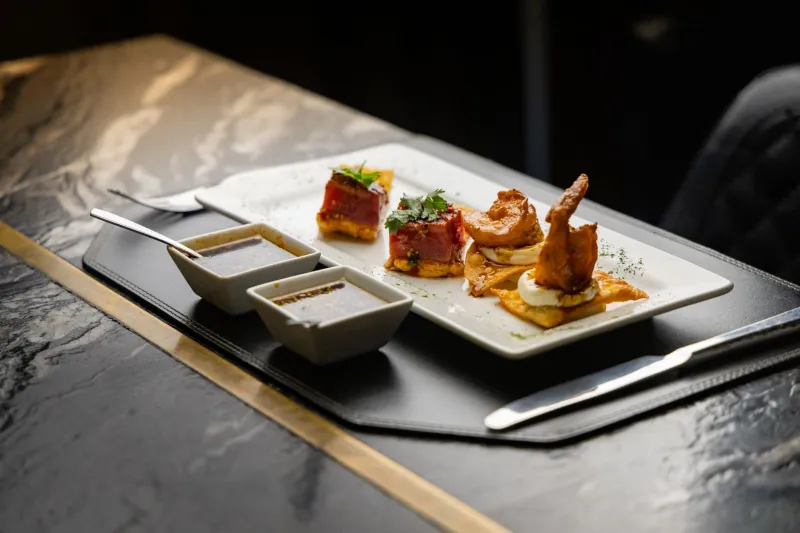
Chill First, Taste More: The Science of Eating While Actually Relaxed
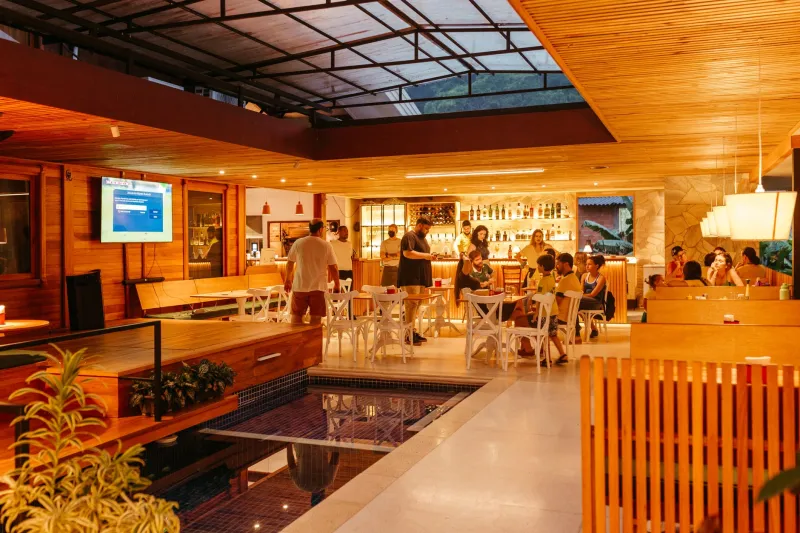
Most of us have been eating wrong — not in terms of what's on the plate, but in terms of what's going on inside our heads when we sit down to eat. You can source the best ingredients, nail the seasoning, and spend forty minutes on a sauce, but if you're hunched over your laptop stress-scrolling between bites, you're basically robbing yourself. The food doesn't hit the same. And that's not just vibes talking — that's neuroscience.
The lounge experience has always understood something that fast-casual dining never really got around to figuring out: the state you're in when you eat matters just as much as the meal itself. Let's break down why, and more importantly, how you can manufacture that state anywhere — at home, at a restaurant, or even on a lunch break that's technically only 22 minutes long.
Your Nervous System Is Running the Kitchen
Here's the deal. Your body operates on two main modes when it comes to the autonomic nervous system: sympathetic (fight-or-flight) and parasympathetic (rest-and-digest). The names are pretty self-explanatory. When you're stressed — deadlines, traffic, a group text that won't quit — your body is in sympathetic mode. Blood flow gets redirected away from your digestive organs toward your muscles. Saliva production drops. Gastric acid secretion slows down.
In practical terms, this means your body is physically less prepared to process food when you're tense. Nutrients absorb less efficiently. Digestion takes longer and can feel uncomfortable. And your taste perception? Genuinely blunted. Research from institutions like the Monell Chemical Senses Center has shown that stress hormones like cortisol can suppress your ability to detect subtle flavors — particularly sweetness and umami, two of the most satisfying taste dimensions on the spectrum.
Flip that equation and something interesting happens. In parasympathetic mode, saliva ramps up (it contains digestive enzymes that start breaking down food the second it hits your mouth), stomach acid flows properly, and your sensory receptors are more alert. You literally taste more. That lamb chop hits different when your cortisol isn't through the roof.
Why Lounges Have Always Been Ahead of the Curve
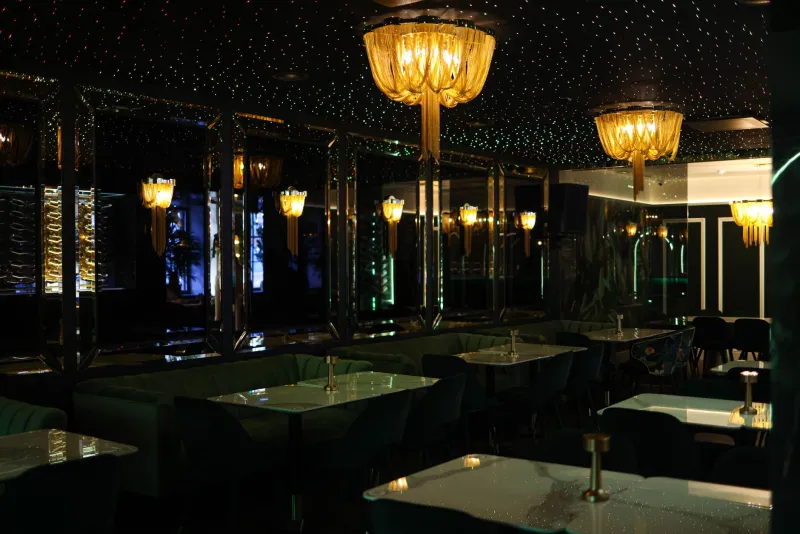
Think about what defines a great food lounge experience. Low, warm lighting. Comfortable seating that doesn't rush you. Background music calibrated to keep energy easy rather than electric. Servers who aren't hovering like they need the table back in 45 minutes. These aren't just aesthetic choices — they're parasympathetic triggers.
Dim lighting signals safety and rest to your brain. Comfortable seating removes physical tension from your body. Slower service naturally extends the meal, which aligns with the slow eating movement that researchers and nutritionists have been championing for years. When you eat slowly — like, actually slowly — your gut has time to send satiety signals to your brain. You end up fuller on less food, more satisfied overall, and with a dramatically better recall of what you actually tasted.
The lounge model isn't accidental. It's an intuitive design around how human beings are built to eat.
The Breathing Hack Nobody Talks About at Dinner
Before you write this off as wellness-blogger territory, hear it out. One of the fastest ways to manually shift your nervous system into parasympathetic mode is controlled breathing — specifically, extending your exhale longer than your inhale. A simple version: breathe in for four counts, hold for one, exhale for six. Do that three times before you take your first bite.
This isn't a meditation retreat exercise. It's a physiological shortcut. The vagus nerve — which runs from your brainstem down through your digestive system — is directly stimulated by slow, deep exhalation. It acts like a manual override switch for your fight-or-flight response. Takes about 60 seconds. Costs nothing. And it genuinely changes how your first few bites register.
Next time you sit down for a meal you actually care about, try it. Don't announce it to the table. Just breathe.
Social Dynamics: The Flavor Multiplier
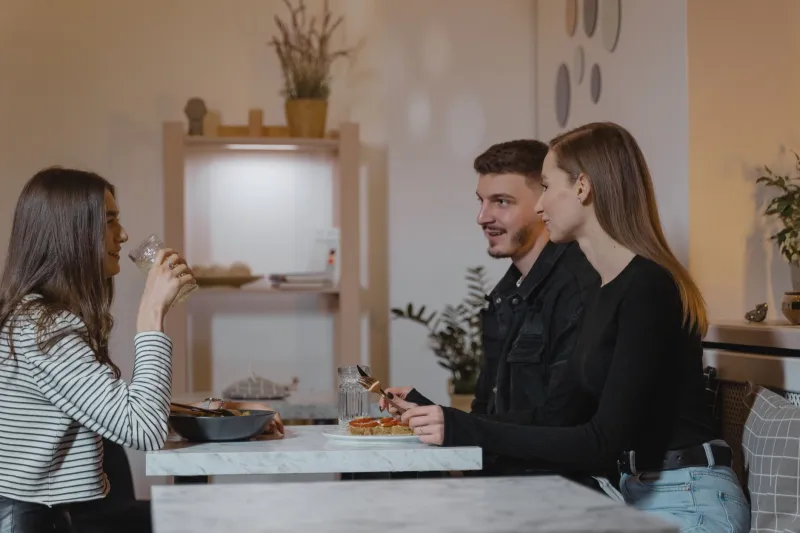
Eating alone and eating with people you genuinely enjoy being around are measurably different experiences — and not just emotionally. Studies out of the University of Oxford found that people who eat with others report significantly higher food enjoyment and rate meals as tastier, even when the food is identical to what they'd eat solo. The social engagement triggers oxytocin release, which in turn reinforces that parasympathetic state.
This is part of why a great lounge night out feels so different from eating at your kitchen counter. It's not just the food. It's the laughter, the shared plates, the conversation that slows everything down naturally. You're not rushing because you're engaged. And that engagement is feeding your nervous system in a way that feeds your palate right back.
If you're eating solo at home and want to replicate some of this, a video call with a friend while you eat isn't a bad substitute. Neither is putting on a podcast or show you genuinely love — something that relaxes you rather than stimulates anxiety. The goal is engaged calm, not distracted stress.
Hacking the Lounge Effect at Home
You don't need a reservation to eat well. Here's a practical framework for turning any meal into a full-sensory, relaxed experience:
Set the table like you mean it. Even for a Tuesday night dinner. A real plate, a cloth napkin, maybe a candle if you've got one. The ritual of setting up signals to your brain that this is a meal worth slowing down for.
Kill the overhead lights. Harsh lighting is a sympathetic nervous system activator. Lamps, candles, or even just dimming your kitchen lights puts you in a different headspace before you've taken a single bite.
Put your phone face-down. Not just on silent — face-down. Notifications create micro-stress spikes even when you don't act on them. One study found that simply having your phone visible on the table reduces cognitive capacity. You're not fully present, and your taste perception suffers for it.
Build in a transition. Lounges naturally create a buffer between the outside world and the table — the walk in, the host greeting, the first drink order. Recreate that at home by giving yourself five to ten minutes between finishing whatever you were doing and sitting down to eat. Change clothes if you can. Step outside for a minute. Let your nervous system shift gears.
Eat with your hands when it makes sense. This isn't just fun — it's tactile engagement that slows you down and increases sensory awareness of what you're eating. It's why finger food at a lounge always feels more satisfying than it has any right to.
The Takeaway (Pun Intended)
The best meal you've ever had probably wasn't just about the food. It was about who you were with, how unhurried the evening felt, and the way everything just seemed to click. That click has a biological explanation, and it's reproducible. The lounge lifestyle — the whole eat well, chill hard ethos — isn't just a vibe. It's a framework for getting more out of every single meal.
Relax first. The food will thank you.