Fewer Choices, Better Nights: The Secret Power of the Short Lounge Menu
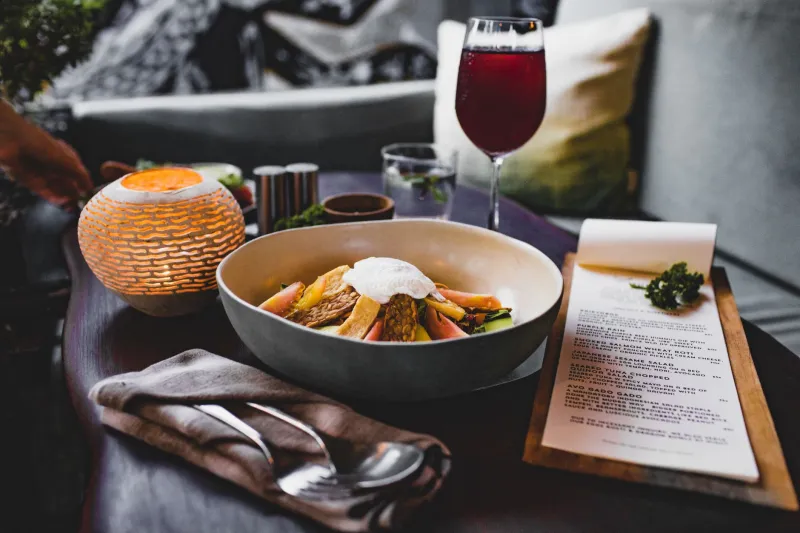
You walk in, grab a seat, and a server slides a menu your way. It's a single folded card — maybe eight items total, a handful of small plates, two or three mains, and a rotating seasonal special. No laminated flip-book. No QR code leading to a PDF with forty-seven options. Just a clean, confident little list that somehow makes the whole decision feel... easy.
That's not an accident. That's a philosophy.
Food lounges across the country have quietly built their reputations on restraint, and the results are hard to argue with. While traditional restaurants keep stacking options like they're competing in a menu arms race, the best lounges are doing the opposite — stripping things back, getting intentional, and watching their guests actually enjoy the process of ordering. Turns out, less really is more. But why?
Your Brain on Too Many Options
Psychologists have a name for what happens when you stare down a 60-item menu: decision fatigue. The concept, popularized in part by researcher Barry Schwartz in his book The Paradox of Choice, basically says that more options don't make us happier — they make us more anxious, more likely to second-guess ourselves, and ultimately less satisfied with whatever we pick.
Think about the last time you ordered from a massive menu. You probably spent ten minutes reading, changed your mind twice, and then spent half the meal wondering if the other thing would've been better. That low-grade stress doesn't exactly set the stage for a great evening.
Now think about the last time a place had six things on the menu and every single one of them looked incredible. You picked, you committed, and you moved on to actually having a good time. The food almost doesn't matter at that point — the experience already won.
Food psychologists point out that when we have fewer options, we engage with them more deeply. We read the descriptions. We ask questions. We get curious. A curated menu invites conversation — between the diner and the server, between guests at the table, between the food and whoever made it.
What Constraint Does for the Kitchen
Here's the side of this equation that doesn't get talked about enough: short menus aren't just better for diners. They're transformative for chefs.
When you're not trying to execute fifty dishes simultaneously, something shifts in the kitchen. Cooks can focus. Techniques get refined. Ingredients get sourced more carefully because you're not buying seventeen different proteins and hoping they all move before the week's out. A lounge running eight plates can afford to splurge on that dry-aged beef or those hand-harvested mushrooms in a way that a traditional restaurant grinding through a full menu simply can't.
Lounge owners who've made this shift often describe it the same way: it feels like editing a piece of writing. You cut the filler, and suddenly what's left has weight. Every plate on a tight menu has to earn its spot. There's no room for the mediocre pasta that's just there because someone asked for it once in 2019.
That intentionality shows up on the plate. Dishes on curated menus tend to be more composed, more confident, more finished — because the kitchen had the bandwidth to actually think them through.
The Lounge Advantage: Atmosphere Does the Heavy Lifting
There's another layer to this that's specific to the lounge format. A great lounge isn't just selling food — it's selling an experience. The lighting, the music, the vibe of the room — all of it is part of the offering. When the atmosphere is doing that much work, the menu doesn't need to be everything to everyone. It just needs to be really, really good at a few things.
This is why you'll often find lounge menus built around a specific flavor identity rather than a broad survey of cuisines. One spot might own the smoky-and-savory lane. Another might go all-in on bright, acidic, citrus-forward plates. That coherence makes the whole meal feel like a conversation rather than a buffet.
Regulars at these places don't feel limited by a short menu — they feel guided. There's a kind of trust that builds when a kitchen consistently nails a small rotation. You stop worrying about what to order and start looking forward to what's new this week.
Bringing the Philosophy Home
If you're hosting a dinner party and you're still trying to please everyone by cooking eight different things, this philosophy is basically a permission slip to stop.
The best home dinner parties work exactly like the best lounge menus: they commit to a lane. Pick a theme — a region, a season, a single protein done multiple ways — and build around it. Three to four dishes executed beautifully will always outperform a spread of seven things you're stressed about.
Here's a simple framework to try:
- One anchor dish — something that takes time and attention, the thing people will remember
- Two supporting plates — sides or small bites that complement without competing
- One wild card — something unexpected, a flavor or texture that makes people ask questions
That's it. Four things. You'll spend less time in the kitchen, more time with your guests, and the meal will feel more cohesive than anything you've pulled off with a full spread.
The other move? Tell people what you're making before they arrive. Lounge menus often get shared in advance — on Instagram, on a chalkboard out front — and it builds anticipation. When guests already know they're getting that braised short rib with the chimichurri, they show up excited instead of just hungry.
Why This Trend Isn't Going Anywhere
American diners have been quietly shifting away from the everything-for-everyone model for years now. The pandemic accelerated a lot of it — restaurants that trimmed their menus out of necessity discovered that their kitchens ran better, their food tasted more consistent, and their guests were just as happy. Many of them never went back.
Food lounges were ahead of this curve by design. The format was always built on the idea that a great night out is about more than just options — it's about intention. It's about a space and a menu working together to create something that feels considered.
There's a confidence in a short menu that a 60-item book just can't fake. It says: we know what we're good at, and we went all in on that. For diners who are tired of spending their evenings paralyzed by choice, that confidence is genuinely refreshing.
So next time you sit down somewhere and the menu fits on a single card, don't read it as a limitation. Read it as an invitation. The kitchen's already done the hard thinking. All you have to do is show up, pick something, and enjoy the night.
That's the lounge way. Eat well, chill hard, repeat.