Same Hunger, Completely Different Experience: What Food Lounges Do That Restaurants Simply Can't
Let's get something straight from the jump: this isn't a takedown of traditional restaurants. Some of the best meals of your life probably happened at a table-cloth spot with a bread basket and a prix fixe menu. But if you've spent any real time at a food lounge — the kind with low lighting, a curated playlist, and a menu that doesn't rush you toward dessert — you already know the experience operates on a different frequency entirely.
The question worth asking is why. What's actually different, structurally and intentionally, between a conventional dining room and a well-built food lounge? And why does that difference show up in what you order, how much you eat, and how you feel when you leave?
The Architecture of Pace
Traditional restaurants are, at their core, designed around throughput. Tables turn. Reservations stack. The physical layout — upright chairs, close spacing, bright enough lighting to read a menu quickly — is built to move people through the experience efficiently. That's not a criticism; it's economics. A restaurant running two or three covers per table per night is a viable business. One that can't turn tables often isn't.
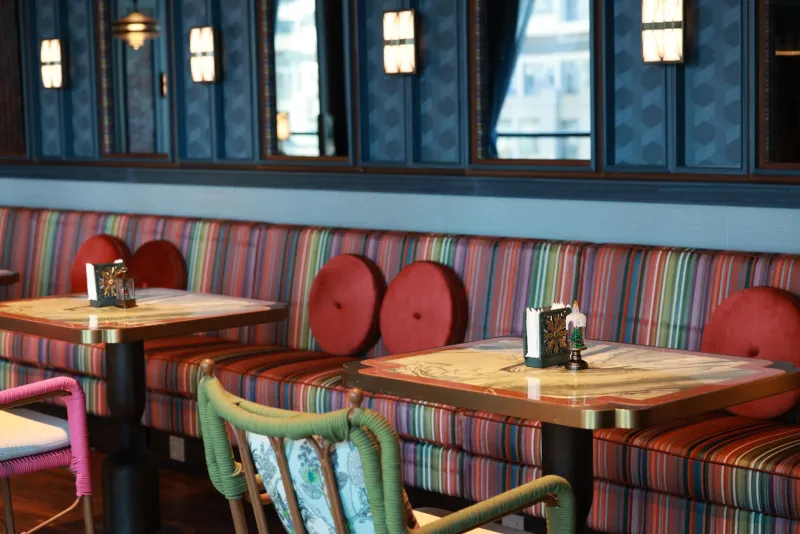
Food lounges are architected differently, and the difference is almost always intentional. Lower seating — couches, booth-style banquettes, deep chairs — physically slows people down. You don't perch on a lounge seat. You settle into it. That shift in posture is subtle, but it changes your psychological relationship with time. You're not here to get through a meal. You're here to be somewhere.
Spacing matters too. Lounge tables tend to be farther apart, or oriented in ways that create semi-private pockets rather than an open floor plan. That separation reduces ambient noise from other tables, which research consistently links to slower eating and greater enjoyment of flavor. When you're not half-listening to the conversation two feet away, you actually taste your food.
Light Does More Work Than You Think
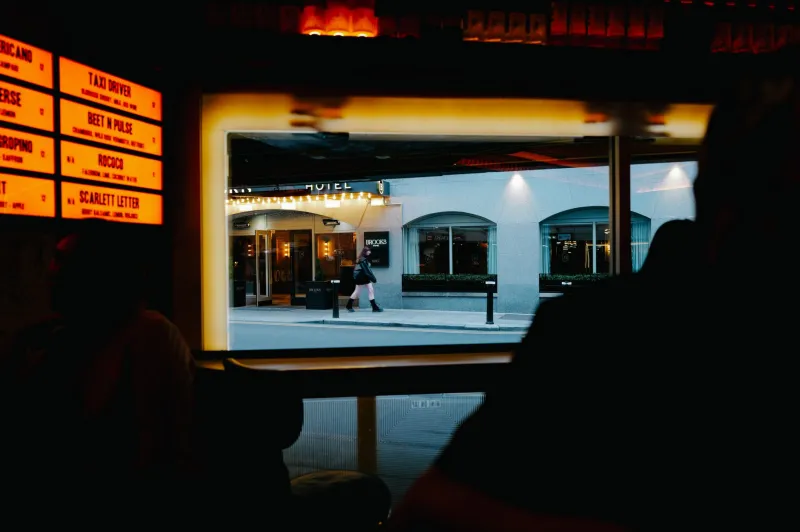
Restaurant lighting is functional. It's bright enough to read, warm enough not to feel clinical, and calibrated to make the food look good in photos. Lounge lighting goes further — it's atmospheric in a way that actively shapes your mood before the food arrives.
Dimmer, warmer light has a documented effect on how relaxed people feel in a space, and relaxation directly impacts taste perception. A tense diner eating quickly in a bright room processes flavor less fully than someone who's physically at ease. Lounges know this. The lighting isn't just vibes — it's a functional part of the dining experience.
There's also a social dimension to lounge lighting that restaurants don't typically leverage. Low light makes a space feel more intimate, which changes how people interact with each other and with their food. Conversations slow down. Meals stretch. People order another round because leaving doesn't feel urgent.
Music as a Menu Item
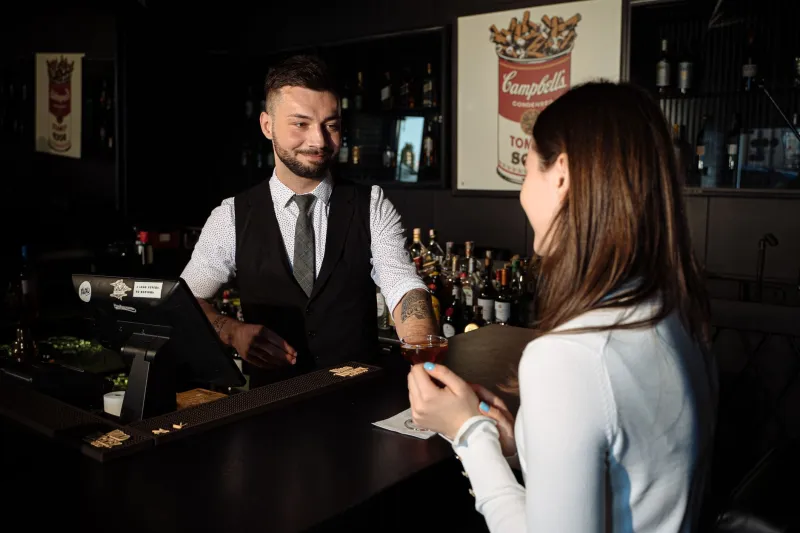
In a standard restaurant, music is background. It fills silence and keeps the room from feeling empty. In a food lounge, the playlist is closer to editorial content — it reflects a point of view, sets a tempo, and shapes the pace of the meal in measurable ways.
There's genuine science behind this. Studies out of the UK and Scandinavia have shown that slower music tempo correlates with slower eating and higher spend per table. Lounges that understand this don't just shuffle a Spotify playlist. They think about BPM, genre transitions, and how the music shifts from early evening to late night. The soundscape is designed.
What that means for you as a diner: you're eating in an environment that's actively encouraging you to slow down, which means you're more likely to notice nuance in flavor, order a second small plate instead of rushing to the check, and leave feeling like you actually experienced something rather than just consumed calories.
Staff Interaction: Information vs. Relationship
The server relationship at a traditional restaurant is transactional by design. They introduce themselves, take your order, check back twice, bring the check. The whole arc is about moving you efficiently through a predetermined sequence. That's not a knock — it's the model.
Lounge floor staff operate differently. Because tables aren't being turned on a tight clock, servers have time to actually talk about the menu, make genuine recommendations, and respond to the room's mood rather than a script. The interaction is less about information delivery and more about building a brief, real connection.
This matters for what you eat. A server who has time to say "the lamb special is incredible tonight, but if you want something lighter, the grilled branzino is really singing right now" is giving you access to the kitchen's actual enthusiasm. That kind of intelligence changes your order — and usually for the better.
The Menu as Invitation, Not Index
Restaurant menus are comprehensive. They need to be. With high traffic and diverse customer bases, a traditional dining room menu covers a lot of ground to ensure that most people find something they want. The result is often a long list organized by category — appetizers, mains, desserts — that functions as a catalog.
Lounge menus are typically shorter and more curated. That restraint is intentional. When a kitchen commits to fifteen dishes instead of forty, each one is there because someone believes in it. The menu becomes a statement of culinary identity rather than a safety net.
For the diner, a shorter menu is actually easier to navigate — but more importantly, it signals something about the kitchen's confidence. You're not choosing from a list of options. You're being invited into someone's perspective on what food should taste like tonight.
Why It All Adds Up to a Different Meal
None of these elements — the seating, the light, the music, the staff, the menu — operates in isolation. They compound. A lounge that gets all of these right creates an environment where you eat more slowly, taste more deeply, connect more genuinely with the people across from you, and leave feeling like you actually went somewhere rather than just ran an errand.
That's the fundamental difference between a food lounge and a restaurant. Both serve food. But only one of them serves an experience — and the experience is the whole point.