When a Restaurant Becomes Your Place: The Psychology Behind Lounge Loyalty
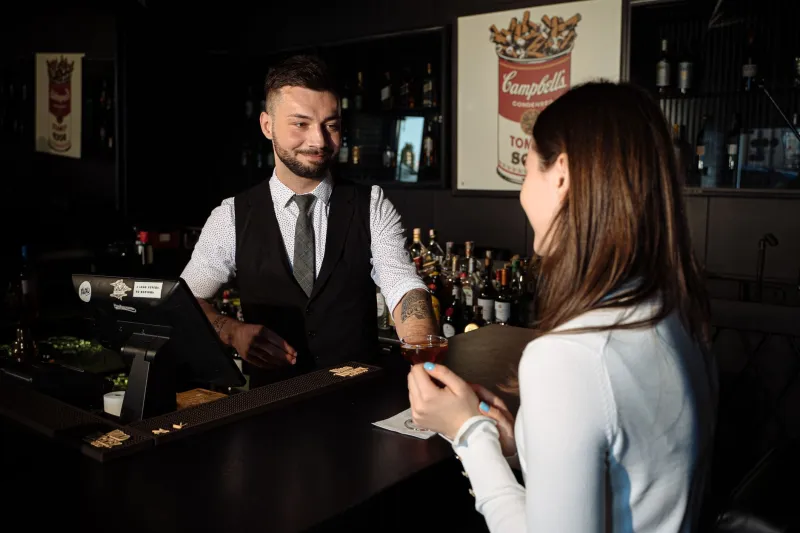
Somewhere between your third and fifteenth visit, something shifts. The host stops asking if you have a reservation. Your server mentions they saved you the corner booth. The kitchen sends out a complimentary amuse-bouche because the chef knows you appreciate that kind of thing. At some point, a lounge stops being a place you go and starts being a place that's partly yours.
That transition — from customer to regular — is one of the quieter, more meaningful things that food culture can produce. And it's almost exclusively a lounge phenomenon. Chains can't replicate it. High-volume restaurants rarely sustain it. But the right kind of food lounge builds it almost by accident, and then tends it carefully once it takes root.
The Third Place You Didn't Know You Needed
Sociologist Ray Oldenburg coined the term "third place" back in the late '80s to describe the social environments that exist outside of home (first place) and work (second place). Bars, barbershops, coffee shops, community centers — spaces where people gather not out of obligation but out of genuine desire to be around other humans. The defining qualities: low barriers to entry, a welcoming atmosphere, a cast of regulars, and a sense that time spent there is time well used.
Food lounges, when they're operating at their best, are textbook third places. They're not trying to be your living room or your office. They're something in between — a space with its own personality, its own rhythms, its own social ecosystem. And once you become part of that ecosystem, you start to feel a pull toward it that goes beyond the food.
This is why the regulars at a great lounge often can't fully explain why they keep going back. "The food is great" is true, but it's not the whole story. What they're really saying is that the place knows them — and being known, genuinely and consistently, is something most of us don't experience enough of.
What Recognition Actually Does to Your Brain
Being greeted by name at a lounge isn't just pleasant. It triggers a neurological response that's worth understanding. Recognition from someone outside your immediate social circle activates the brain's reward centers in ways that feel disproportionate to the action itself. A server remembering your usual drink order produces a genuine hit of positive feeling — not because you're easily impressed, but because being remembered is a fundamental human need.
Psychologists who study belonging and social identity have found that people who feel recognized in a community space — even a commercial one like a lounge — report higher overall life satisfaction scores than those who don't have such spaces. Your regular lounge spot is, in a measurable sense, good for you.
And the effect compounds over time. The more a lounge demonstrates that it knows you — your preferences, your habits, your tolerance for spice, the fact that you always want the check split a specific way — the more emotionally invested you become in the relationship. You start to feel a kind of loyalty that isn't really about the food at all. It's about being part of something.
The Identity Layer Nobody Talks About
Here's the part that people don't usually admit out loud: your regular spot says something about who you are. The lounge you claim as yours is, in a low-key way, an identity marker. It reflects your taste, your values, your social life, and the kind of experience you think is worth showing up for.
This is why people get genuinely defensive about their regular spots. When someone dismisses the place you've been going to for three years, it doesn't feel like a food opinion — it feels personal. Because it kind of is. You've woven that place into your life. Your first date happened there. You celebrated a promotion there. You've had long, honest conversations at that corner table that you wouldn't have had anywhere else.
Chain restaurants can't offer this. Not because the food is necessarily worse, but because the chain's entire model is built around consistency at scale — meaning sameness across locations, standardized interactions, and staff turnover that prevents the kind of relationship-building that makes a place feel like yours. The best chain experience is reliably pleasant. The best lounge experience is irreplaceable.
How Lounges Build the Bond (Intentionally and Otherwise)
Some of what makes a lounge feel like home is structural. Consistent staff matters enormously — a lounge with low turnover is one where the people serving you actually accumulate knowledge about you over time. That knowledge is the raw material of belonging.
Physical consistency matters too. Regulars orient themselves to a space. They have preferred seats, preferred lighting, a sense of how the room sounds at different hours. A lounge that changes its layout dramatically or rebrands its aesthetic risks disrupting the sense of familiarity that its regulars are there for.
But some of it is less calculated. The best lounge communities form organically — regulars start recognizing each other, nodding across the room, eventually sharing a table or a conversation. The lounge becomes a connective tissue between people who might never have crossed paths otherwise. That social dimension, once it exists, is enormously hard to walk away from.
Owners of independent lounges often talk about this phenomenon with a mix of pride and humility. They built a space, curated a menu, trained a team — but the community that formed around it? That happened on its own. They just created the conditions.
Why You'll Keep Going Back
Once a lounge becomes your place, the relationship tends to be durable. You'll forgive an off night in the kitchen. You'll weather a menu change that removes your favorite dish. You'll defend the spot to friends who've only been once and didn't get it. Because what you're loyal to isn't just the food — it's the accumulated weight of every good night you've spent there.
That's what chains spend millions trying to manufacture with loyalty programs and points systems and app-based rewards. And that's what a great food lounge produces for free, just by being itself consistently and treating its regulars like they matter.
Because they do. The regulars aren't just revenue. They're the proof that the place means something — that it got something right. And honestly? That's the highest compliment a lounge can receive.