Comfort Costs Money — And Honestly, You're Happy to Pay It
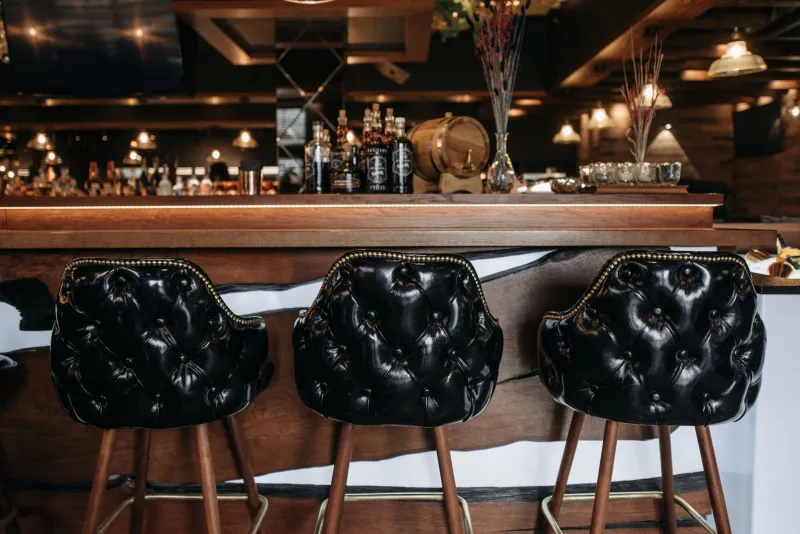
You've been there. You slide into a plush booth, the lighting is doing everything right, a drink lands in front of you before you've even fully exhaled from the workday, and two hours later you're signing a check that's maybe — okay, definitely — double what you'd spend at the spot down the street with the plastic chairs and fluorescent overhead glare. And here's the wild part: you don't even feel bad about it.
That's not an accident. That's the lounge effect in full swing, and it's one of the more fascinating intersections of psychology, hospitality, and straight-up human behavior happening in American dining right now.
Your Brain Doesn't Just Taste the Food — It Prices the Room
Behavioral economists have spent years studying what's called "perceived value" — basically, what your brain decides something is worth before your rational mind gets a word in. And in a dining context, the environment is doing a massive amount of that valuation work before a single bite hits your tongue.
Dr. Melissa Hargrove, a consumer behavior researcher who consults for hospitality brands across the Southeast, puts it plainly: "When a space signals comfort and care — through lighting, acoustics, seating quality, even smell — the brain categorizes the entire experience as premium. That categorization makes the pricing feel proportional, even generous."
In other words, you're not just paying for the food. You're paying for the feeling. And when the feeling is good, the math stops mattering the way it normally would.
The Stay-Longer, Spend-More Loop
One of the defining features of lounge dining versus traditional restaurant dining is dwell time — how long people actually stick around. Fast-casual spots are engineered for turnover. Lounges are engineered for the opposite.
And here's where it gets financially interesting: the longer you stay, the more you order. Not because you're being upsold aggressively, but because you want to. Another round of drinks. A shared dessert plate. One more small bite because the conversation is still going and the vibe hasn't peaked yet.
Jamie Reyes, who co-owns a food lounge in Austin, Texas, has watched this play out for years. "Our average check isn't high because our prices are outrageous — it's high because people genuinely don't want to leave. They order another cocktail, they grab an extra appetizer. The comfort extends the meal, and the extended meal extends the tab. But nobody's complaining on the way out."
That's the loop: comfort creates extended stays, extended stays create additional orders, additional orders increase the check, and the comfort justifies the whole thing retroactively. It's elegant, honestly.
Why "Worth It" Is the Most Powerful Phrase in Dining
Spend any time reading restaurant reviews and you'll see it constantly — "totally worth it," "worth every penny," "100% worth the splurge." That language is almost never about the food alone. It's about the full experience delivering on its promise.
Lounge-style dining spaces are particularly skilled at making that delivery. When you factor in the seating, the service pace, the curated soundtrack, the lighting that somehow makes everyone look better — the food becomes part of a larger package. And packages feel like better value than individual line items.
This is why a $22 cocktail at a well-designed lounge stings less than a $14 cocktail at a mediocre bar. The context reframes the cost. You're not buying a drink; you're buying an hour of atmosphere with a drink included.
What Smart Lounge Owners Know About Pricing
Restaurant owners who operate in the comfort-forward lounge space have figured out something that more traditional dining establishments often miss: pricing confidence is directly tied to environmental investment.
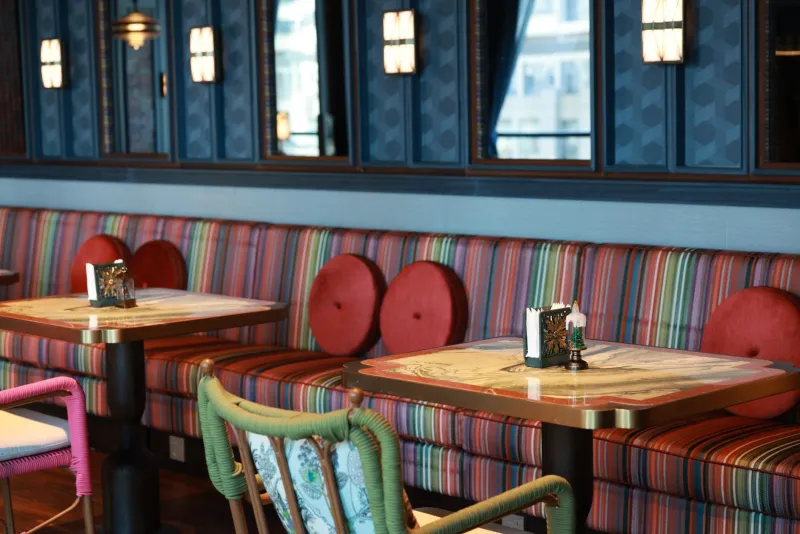
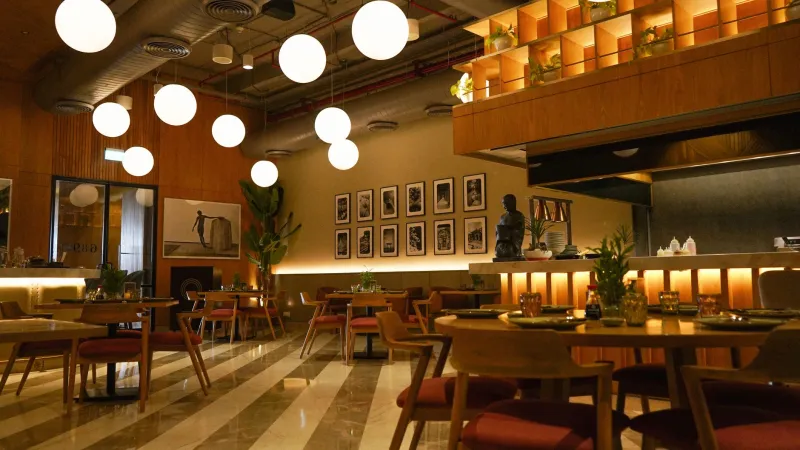
When you walk into a space that's clearly been thoughtfully designed — where the furniture didn't come from a liquidation sale, where the acoustics were considered, where the staff moves with intention — you assume the food and drink pricing reflects that investment. And you're usually right.
"We spent real money on our space before we opened," says Marcus Webb, who runs a food lounge in Chicago's West Loop. "And because of that, we can price our menu at a level that makes the business sustainable without people feeling gouged. The room does the justification work for us."
That's a pricing strategy that's less about numbers and more about narrative. The story the space tells gives the menu room to breathe.
Bringing This Energy Home (Without the Commercial Build-Out)
Here's where it gets practical for the home dining crowd — because you can absolutely trigger this same perceived-value psychology at your own table, and it doesn't require a renovation budget.
The core principle is simple: when your environment signals that you've put in effort and care, everything served within it tastes better and feels more worth the spend on ingredients. So if you're going to splurge on that dry-aged ribeye or that bottle of natural wine, set the stage first.
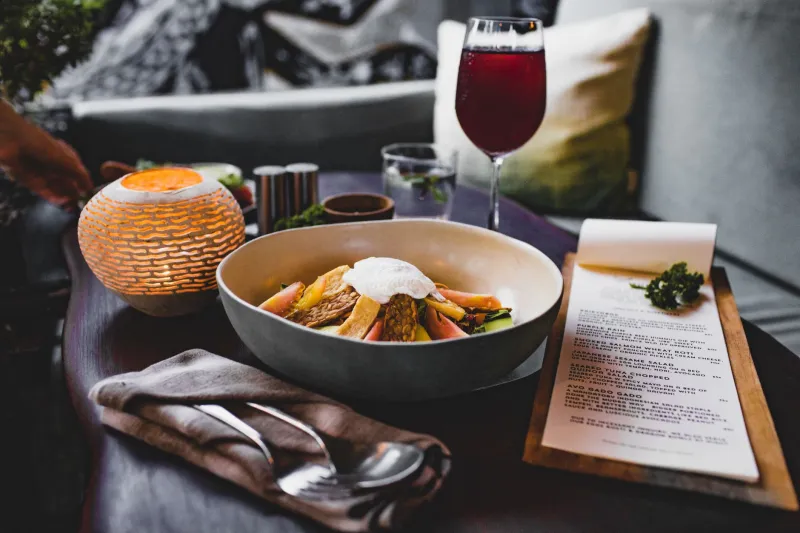
Lighting is your first move. Ditch the overhead lights. Use lamps, candles, whatever you've got. Warm, low light changes the entire emotional register of a meal.
Slow down the pace. Lounges don't rush you. Don't rush yourself. Put the phone in another room. Let courses breathe between them. Refill glasses before they're empty.
Invest in one quality piece per meal. Instead of spending moderately on every component, pick one thing to splurge on — a really good cheese, an exceptional cut of meat, a boutique spirit — and let that anchor the experience. The lounge philosophy isn't about everything being expensive; it's about the right things being excellent.
Curate your soundtrack. This one's free and wildly underrated. A well-chosen playlist changes the pace of a meal more than most people realize. Keep it intentional, keep it at a volume where conversation still flows easily.
When you do all of this, that $45 ingredient suddenly feels like a $90 experience. That's the lounge effect working at home.
The Real Takeaway
The reason you're willing to spend more at a great lounge isn't irrational — it's actually a pretty accurate read of what you're receiving. Comfort, time, atmosphere, and intention are all real things with real value. The food is part of the equation, not the whole equation.
And when you start applying that same logic to your home dining decisions, something shifts. You stop thinking about the cost of a quality ingredient in isolation and start thinking about the full experience you're creating around it. Suddenly, the splurge isn't a splurge — it's an investment in an evening worth having.
Eat well, chill hard, repeat. Your wallet will figure it out.